
Introduction
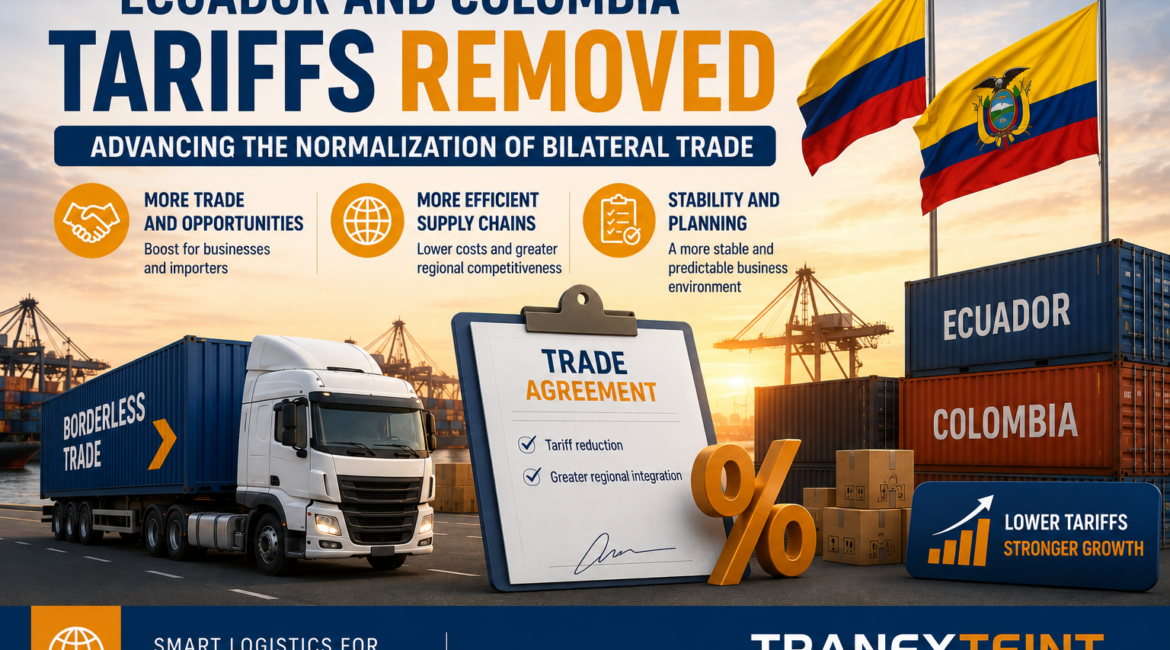
After several months of diplomatic and trade tensions, Ecuador and Colombia are moving forward with the removal of the extraordinary tariff measures that marked one of the most significant trade disputes within the Andean Community (CAN) in recent years. The reciprocal tariffs imposed by both countries created uncertainty for importers, exporters, and logistics operators, impacting supply chains, import costs, and regional trade flows. With the gradual elimination of these measures, a new chapter begins for bilateral trade and for businesses that rely on economic integration within the Andean region.
How Did the Trade Dispute Between Ecuador and Colombia Begin?
The controversy began in early 2026 when Ecuador implemented a series of extraordinary trade measures justified on national security and border protection grounds. Initially, a 30% tariff was imposed on products originating from Colombia. The rate was later increased to 50% and eventually reached 100% for certain imported goods.
In response, Colombia adopted reciprocal measures by imposing tariffs ranging from 35% to 75% on more than one hundred Ecuadorian products. The affected sectors included food products, agricultural goods, manufactured products, and a variety of consumer goods.
The escalation of trade restrictions raised concerns in both countries due to the high level of commercial integration that exists between them. Ecuador and Colombia maintain one of the most dynamic trade relationships in the Andean region, with thousands of companies involved in import and export activities, cross-border transportation, international logistics, and regional distribution.
Beyond the direct economic impact, the dispute created operational delays, increased logistics costs, and made international procurement planning more challenging, particularly for businesses that depend on suppliers located across the border.
The Andean Community’s Intervention and the Removal of Tariffs
As the dispute intensified, the General Secretariat of the Andean Community intervened to assess the legality of the measures adopted by both governments.
In May 2026, the Andean Community issued resolutions concluding that the tariffs and trade restrictions imposed by Ecuador and Colombia were incompatible with the Cartagena Agreement and the Trade Liberalization Program that serves as the foundation of the Andean free trade area. As a result, the regional body instructed both countries to withdraw the measures within a specified timeframe and restore normal trading conditions.
The Andean Community’s resolutions are legally binding on member states, making the decision a significant step toward restoring bilateral trade relations.
Subsequently, Ecuadorian authorities announced the beginning of a gradual reduction of the tariffs applied to Colombian products while continuing discussions and legal reviews within the regional framework. At the same time, Colombia expressed its willingness to move forward with the removal of the retaliatory measures imposed on Ecuadorian goods.
This process aims to reestablish the free movement of goods within the Andean Community and reduce the negative effects the dispute had on businesses operating in both markets.
What Opportunities Does the Removal of Tariffs Create for Businesses?
The elimination of these trade barriers represents positive news for importers, exporters, and logistics service providers throughout the region.
First, it helps restore competitiveness that had been affected by the artificial increase in import costs. Many companies that suspended purchases or restructured their supply chains may now reconsider sourcing from Colombian or Ecuadorian suppliers under more favorable conditions.
Second, lower tariffs contribute to greater cost stability and facilitate inventory management, international contracting, and medium-term procurement planning.
The new trade environment also provides an opportunity for businesses to reassess their international trade strategies, identify new regional suppliers, and take advantage of the benefits offered by the Andean market, including shorter transit times, lower transportation costs, and well-established trade integration mechanisms.
However, the recent dispute highlights the importance of staying informed about regulatory changes, trade defense measures, and decisions issued by regional organizations, as these developments can have a significant impact on the profitability of international operations.
Conclusion
The tariff dispute between Ecuador and Colombia demonstrated how trade policy decisions can immediately affect supply chains, logistics costs, and business competitiveness. The intervention of the Andean Community and the subsequent removal of the extraordinary tariffs represent an important step toward normalizing bilateral trade and strengthening regional economic integration.
For companies that import or export between the two countries, the key recommendation is to conduct a comprehensive review of current costs, tariff classifications, and sourcing strategies in order to take full advantage of the new trade conditions while minimizing potential operational risks associated with future regulatory changes.
At Tranexteint, we specialize in international logistics, foreign trade, customs management, and import-export operations between Ecuador, Colombia, and global markets. Our team can help your business optimize logistics processes, reduce costs, and take full advantage of the opportunities created by evolving international trade regulations.
