
Introduction
The U.S. administration has recently announced significant adjustments to its tariff policy on steel and aluminum imports, measures that will take effect during the first quarter of 2026. These modifications, which aim to protect the domestic steel industry, represent both challenges and opportunities for small and medium-sized Latin American enterprises that maintain trade relations with the United States. Understanding the scope of these changes and preparing adequately is fundamental to maintaining competitiveness in one of the region’s most important markets.
What Changes Are Being Implemented?
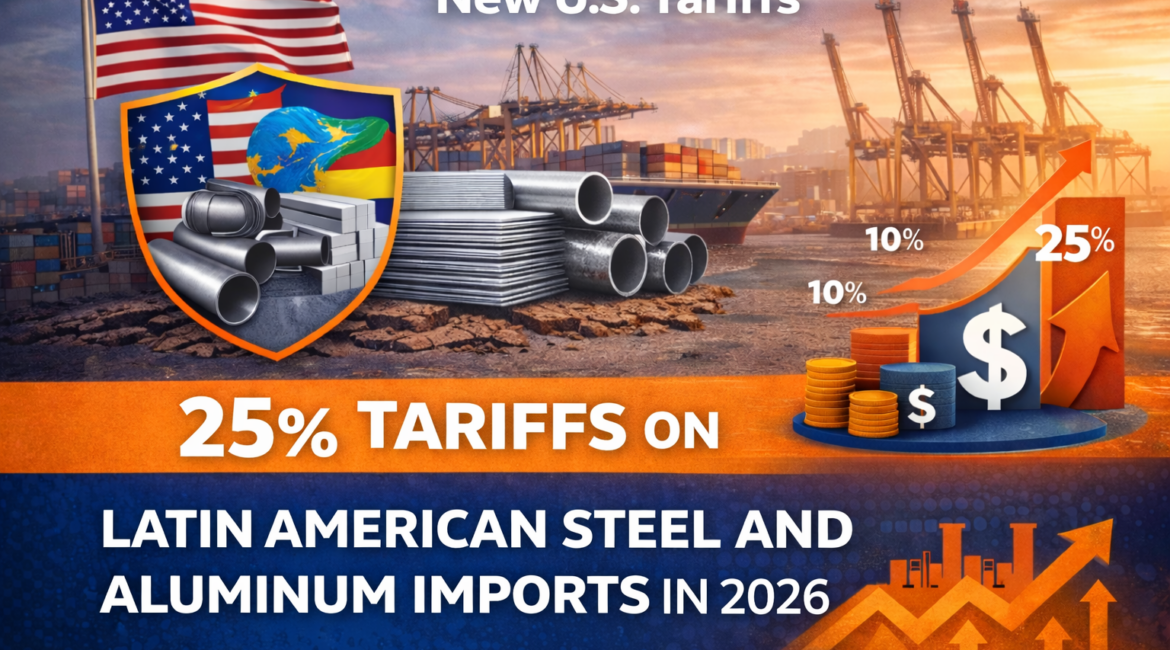
The United States has decided to increase tariffs on imported steel and aluminum from 10% to 25% for products from certain countries, while maintaining preferential agreements with strategic trade partners under the USMCA framework (United States-Mexico-Canada Agreement). According to information from the U.S. Department of Commerce, these measures primarily affect imports of hot-rolled steel, cold-rolled steel, steel pipe, and unprocessed aluminum products.
The measure responds to concerns about global production overcapacity and trade practices that, according to U.S. authorities, distort the international market. For Latin American companies, this means that products that previously entered with reduced or exempt tariffs will now face significant additional costs, unless they qualify under specific exceptions or existing trade agreements.
It is important to note that exclusion mechanisms exist for certain products that are not manufactured in the United States or that are essential for specific supply chains. Companies can request these exclusions through a formal process with the Department of Commerce, although response times can extend between 90 and 120 business days.
Direct Impact on SME Operations
For small and medium-sized enterprises that import steel or aluminum inputs from the United States, or that export manufactured products containing these materials to the U.S. market, the implications are multiple. First, there is a direct increase in import costs that can range between 15% and 25% of the CIF value (cost, insurance, and freight) of the merchandise, depending on the specific tariff classification of the product.
This cost increase can erode profit margins of companies operating with tight financial structures, a common characteristic among SMEs. Additionally, the uncertainty generated by frequent regulatory changes makes medium and long-term planning difficult, complicating the preparation of reliable budgets and financial projections.
On the other hand, companies that produce locally may find in this situation a competitive advantage over competitors who depend on U.S. imports. Import substitution presents itself as a viable alternative, especially in sectors such as construction, automotive manufacturing, and machinery fabrication, where regional installed capacity exists that can satisfy internal demand.
Adaptation Strategies and Best Practices
To successfully navigate this new tariff scenario, SMEs must implement proactive strategies. The first recommendation is to conduct a complete supply chain audit to identify which products are subject to the new tariffs and evaluate the specific financial impact on each business line. This assessment should include an updated tariff classification analysis, preferably performed by a foreign trade specialist.
Exploring alternative suppliers in countries with which free trade agreements are in force constitutes another fundamental strategy. For example, Ecuadorian companies can benefit from trade agreements with the European Union or Andean Community countries to access inputs without additional tariffs. Likewise, diversifying destination markets reduces dependence on the U.S. market and mitigates risks associated with unilateral regulatory changes.
Adequate documentation and rigorous compliance with origin requirements are critical to taking advantage of existing tariff preferences. Companies must maintain detailed records demonstrating product origin, regional content percentages, and substantial transformation processes—documentation that may be required during customs inspections or post-clearance audits.
Finally, considering the request for tariff exclusions for specific products may be a viable option, particularly for companies that import specialized inputs without domestic equivalents in the United States. This process requires detailed technical documentation and solid economic justification, but can result in significant long-term savings.
Conclusion
The new U.S. tariffs on steel and aluminum represent a considerable challenge for Latin American SMEs involved in cross-border supply chains. However, with strategic planning, specialized advice, and timely adaptation, companies can not only mitigate negative impacts but also identify growth opportunities in this new commercial context. The key lies in acting with anticipation, maintaining operational flexibility, and having updated information on international trade regulations and trends.
At Tranexteint, we understand the challenges that SMEs face in light of constant changes in foreign trade policies. Our team of specialists can advise you on assessing the impact of these new tariffs on your specific operation, exploring strategic sourcing alternatives, managing tariff exclusion requests, and optimizing your international supply chain. Allow us to help you turn these regulatory challenges into competitive advantages for your company. Contact us today for personalized consulting.
Sources consulted:
- U.S. Department of Commerce, International Trade Administration (2026)
- Office of the United States Trade Representative – Trade Policy Updates
- World Trade Organization – Trade Monitoring Reports
